Towards horizontal leadership models in youth work
This publication was created to help youth workers, educators, and organizations put that idea into practice. It gathers insights, examples, and methods developed through international cooperation and hands-on experience in the youth field. The focus is not on leadership as a title or status, but as a process of participation, shared responsibility, and inclusion.
Inclusive leadership means making sure that all voices — regardless of gender, background, ability, or location — are heard and valued. It also means designing learning and participation processes where everyone can contribute meaningfully, not just those who are confident or outspoken. This booklet is a practical guide to help you make that happen in your daily work
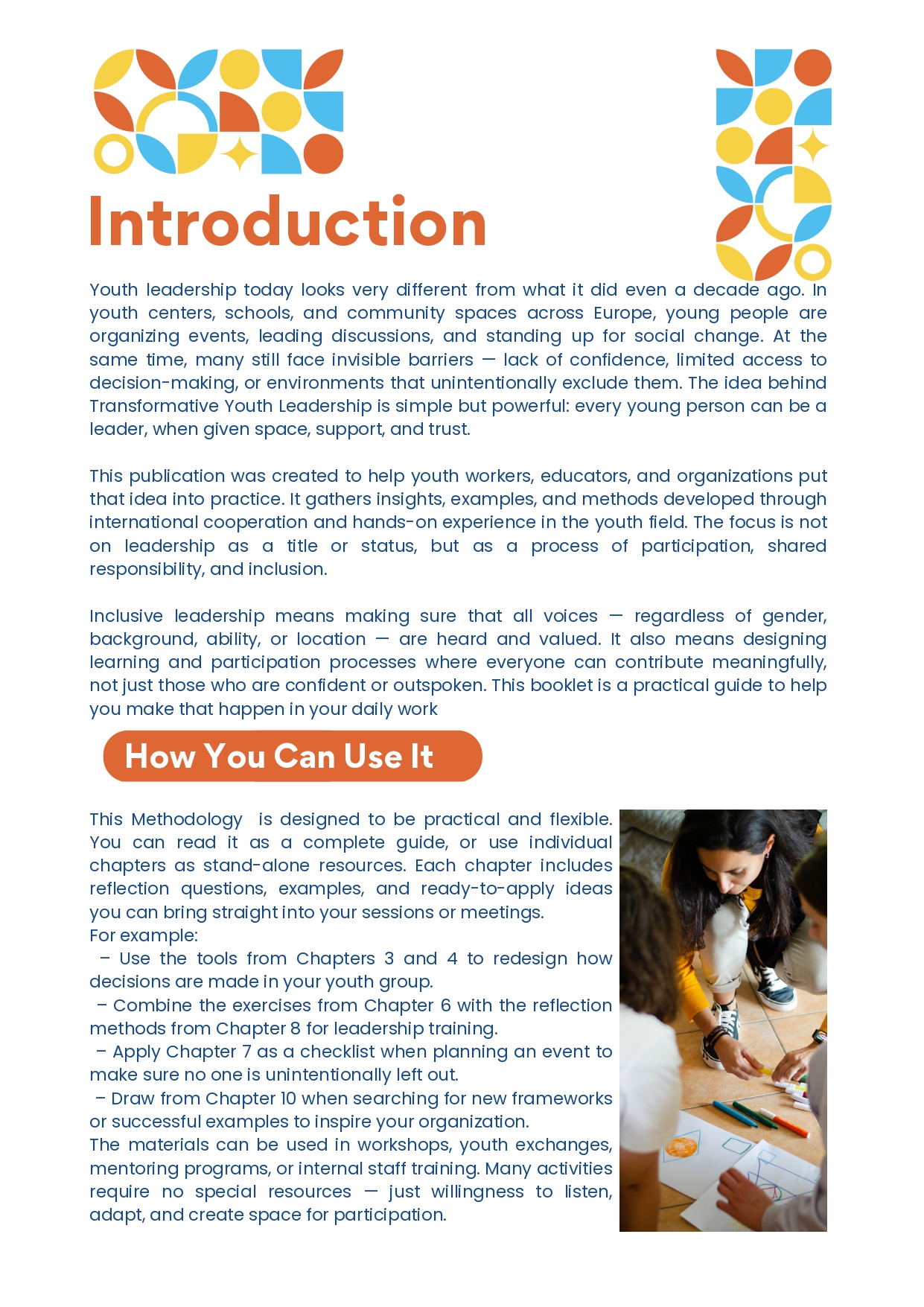
This Methodology is designed to be practical and flexible. You can read it as a complete guide, or use individual chapters as stand-alone resources. Each chapter includes reflection questions, examples, and ready-to-apply ideas you can bring straight into your sessions or meetings.
For example:
The materials can be used in workshops, youth exchanges, mentoring programs, or internal staff training. Many activities require no special resources — just willingness to listen, adapt, and create space for participation.
This Methodology is for: Youth workers and trainers who facilitate learning and participation; Community organizers and local decision-makers interested in youth engagement; Educators working with young people in schools or non-formal education; NGO staff and volunteers involved in managing youth initiatives.
Whether you work with small community groups, local youth councils, or international teams, yo will find methods here that can help you make leadership more inclusive and participatory.
Inclusive youth leadership is more than a project goal — it’s a longterm approach that changes how young people and adults work together. It’s about trust, empathy, and shared responsibility. When young people feel that their voices count, they not only grow personally but also contribute to stronger, fairer communities.
We hope this Methodology becomes a living resource — something you come back to, adapt, and share with your team. It is written by practitioners, for practitioners, with the belief that leadership can be learned by doing and improved by reflecting together.
Creating inclusive spaces is a continuous process. This publication offers a direction — a map to help you start, strengthen, or rethink your path toward leadership that truly includes everyone.
This Methodology was created as part of the Transformative Youth Leadership project – an initiative, supported by Erasmus+ program that brings together organizations, educators, and youth workers from across Europe who believe that leadership should be open to
everyone.
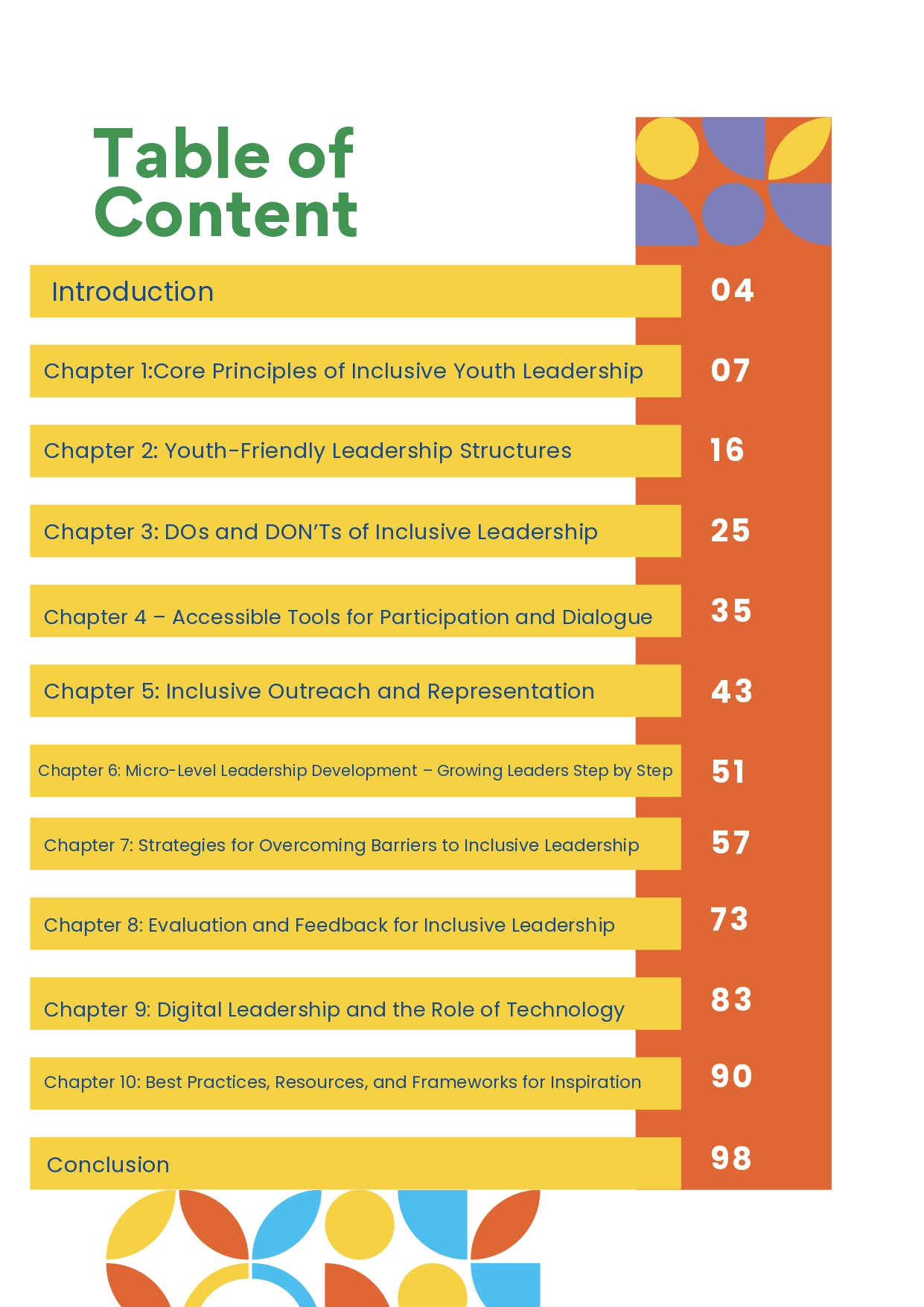
The publication is divided into ten chapters, each exploring a key aspect of inclusive youth leadership. Together, they form a complete toolkit that you can use in different stages of your work — from planning and facilitation to evaluation and long-term development.
Chapter 1 explains the core principles of inclusive youth leadership — participation, equity, diversity, and empowerment. It provides the theoretical base but keeps it practical, showing how these values translate into daily decisions like how to run meetings, choose facilitators, or distribute tasks in youth projects.
Chapter 2 offers concrete DOs and DON’Ts for inclusive leadership. It’s a reality check for anyone leading a group, full of short, direct examples of what encourages participation and what unintentionally shuts people down. Youth workers can use it as a quick self-reflection tool before or after sessions.
Chapter 3 looks at how to build youth-friendly leadership structures — from youth boards and committees to collaborative decision making models. It gives step-bystep suggestions for creating systems where young people actually share power, rather than just being consulted.
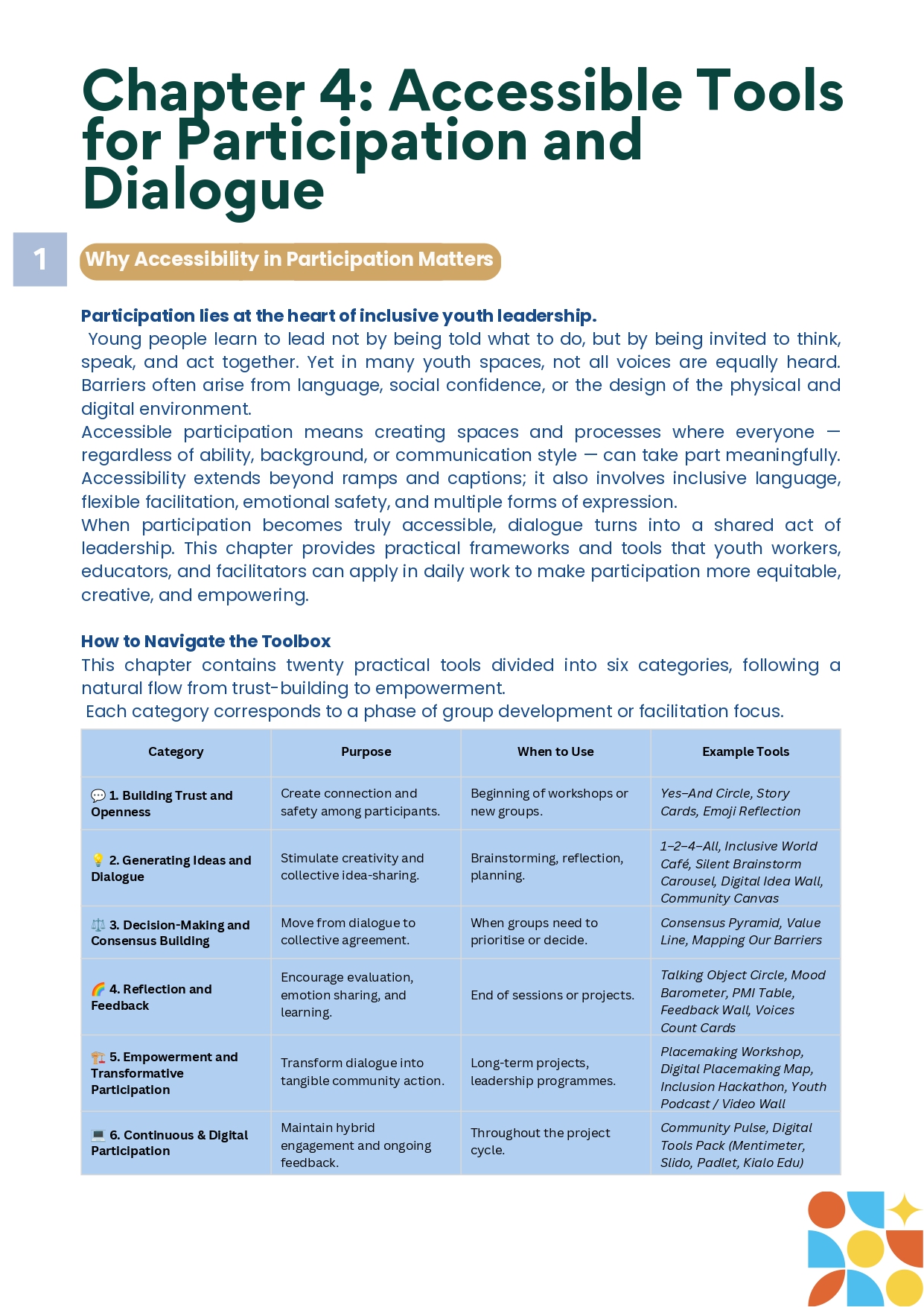
Chapter 4 introduces accessible tools for participation and dialogue. Here you’ll find easy-to-use, adaptable methods — creative icebreakers, discussion formats, digital engagement tools, and visual facilitation techniques — that help ensure everyone in a group can express their views comfortably, regardless of language level or
background.
Chapter 5 explores how to reach and represent diverse groups of young people, especially those who rarely take part in leadership spaces. It provides communication tips, outreach ideas, and examples of inclusive event design that make young people feel welcome and represented.
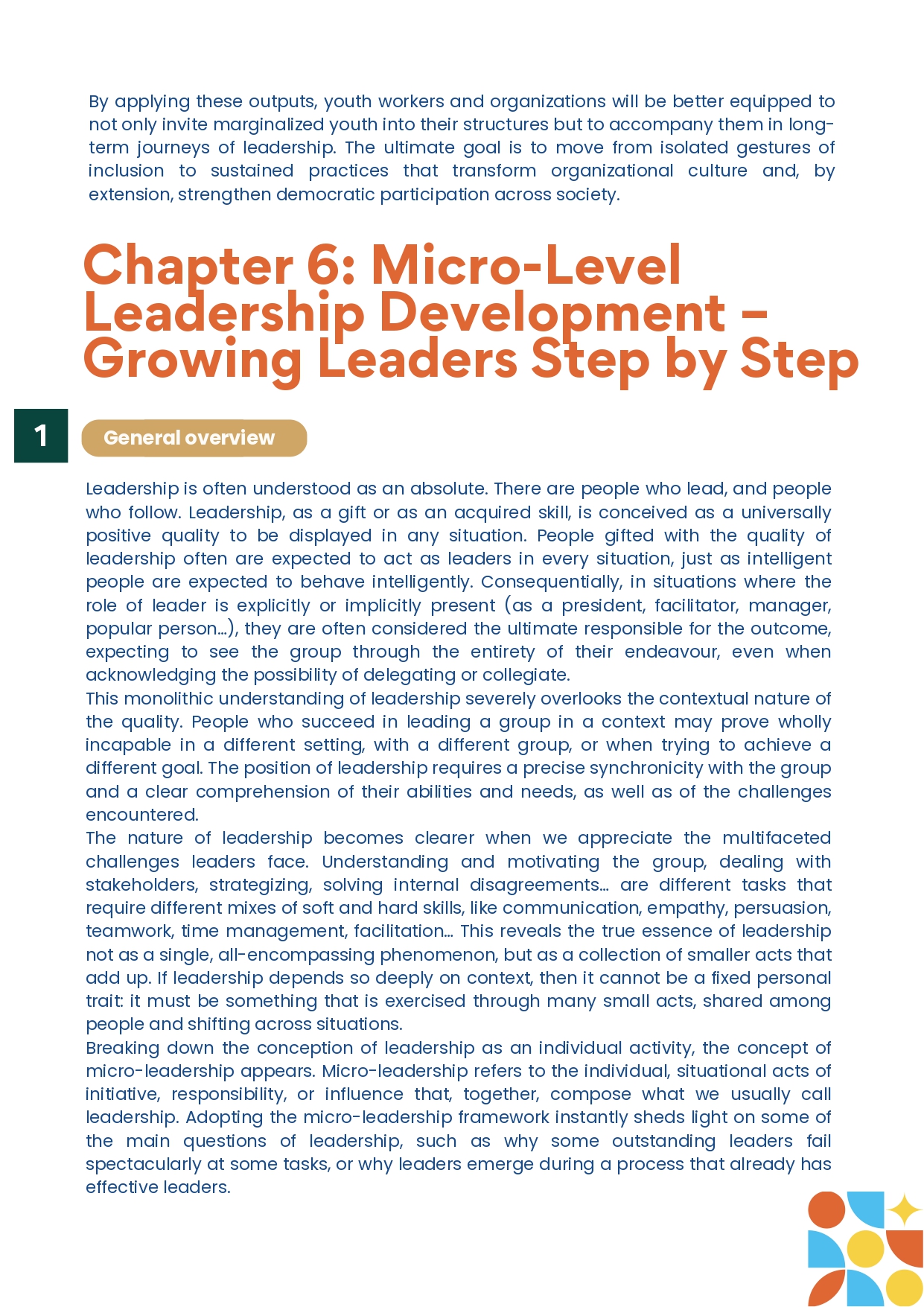
Chapter 6 dives into micro-leadership — the idea that leadership is learned through small, everyday actions. It explains how to give participants manageable leadership roles and build confidence over time. Youth workers can apply this chapter directly when assigning responsibilities or designing reflection sessions.
Chapter 7 identifies barriers to inclusion — from power imbalances and cultural stereotypes to practical issues like transport or costs — and offers realistic strategies to overcome them. It’s especially useful for organizations reviewing their internal policies or trying to make their programs more inclusive.
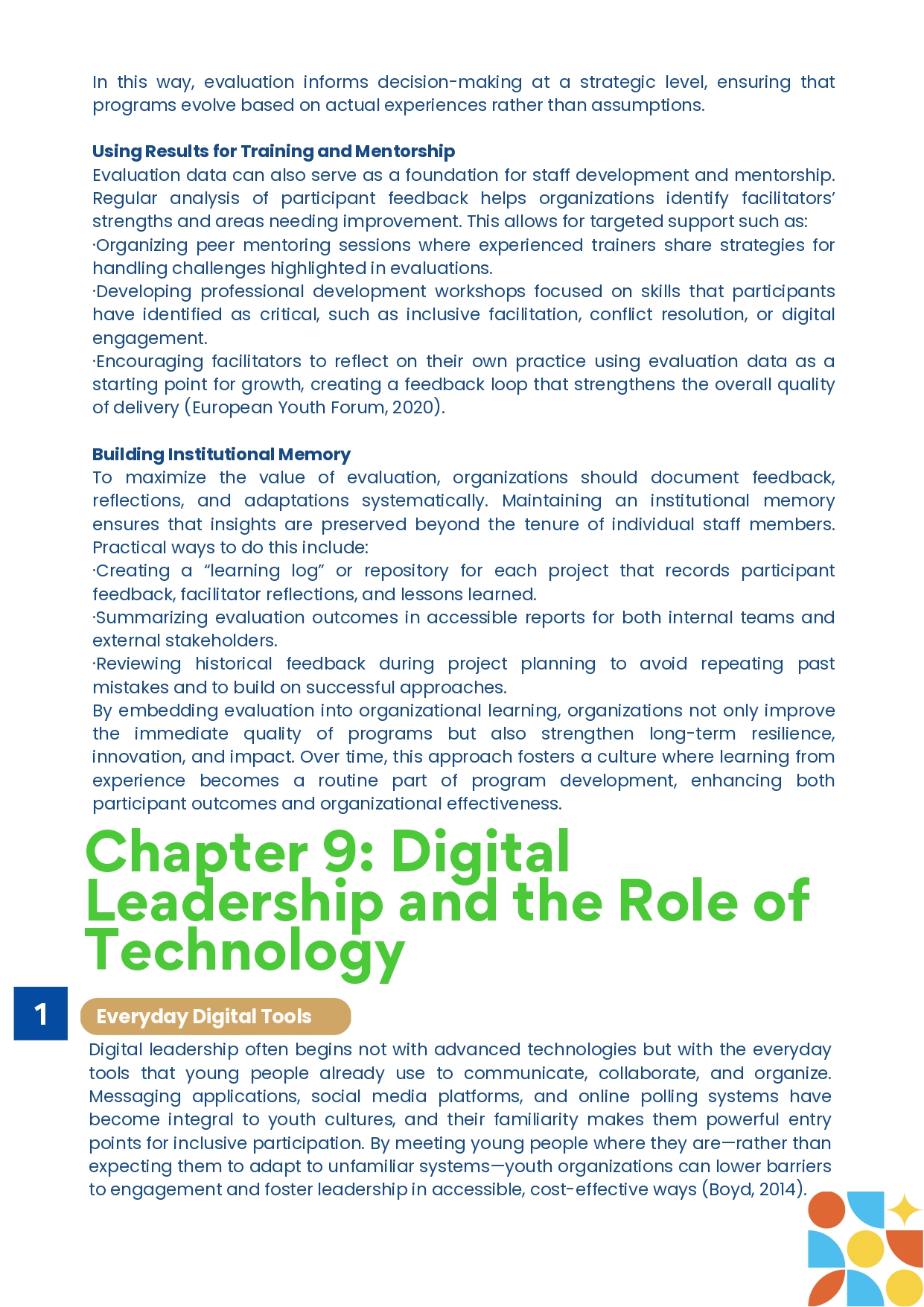
Chapter 8 shows how to use evaluation and feedback not just as reporting tools, but as genuine opportunities for participation. It introduces reflective questions, simple evaluation templates, and participatory feedback methods that make young people feel listened to and valued.
Chapter 9 explores digital leadership and the role of technology in participation. It looks at how online tools can empower youth voices, foster collaboration, and create new spaces for leadership — while also discussing how to stay inclusive in the digital world.
Chapter 10 gathers best practices, frameworks, and resources from across Europe. It’s a source of inspiration, offering real examples of successful inclusive leadership in action and links to open educational materials you can adapt in your own work.
The Methodology is available at NO COST. If you are accessing it from a PC or Laptop, you can download it from the right side of your screen (look for the Download File). For mobile users, simply scroll down to the page to find the Download File. The Manual is available in 7 languages: English, Spanish, Italian, Swedish, Bulgarian, Macedonian and Albanian. You can download your preferred language using the buttons below. Each flag represents a language into which the Research has been translated. For more information, please contact us.
This Methodology is designed to be practical and flexible. You can read it as a complete guide, or use individual chapters as stand-alone resources. Each chapter includes reflection questions, examples, and ready-to-apply ideas you can bring straight into your sessions or meetings.
Transformative Youth Leadership: towards horizontal leadership models in youth work | 2024-1-ES02-KA220-YOU-000251305

